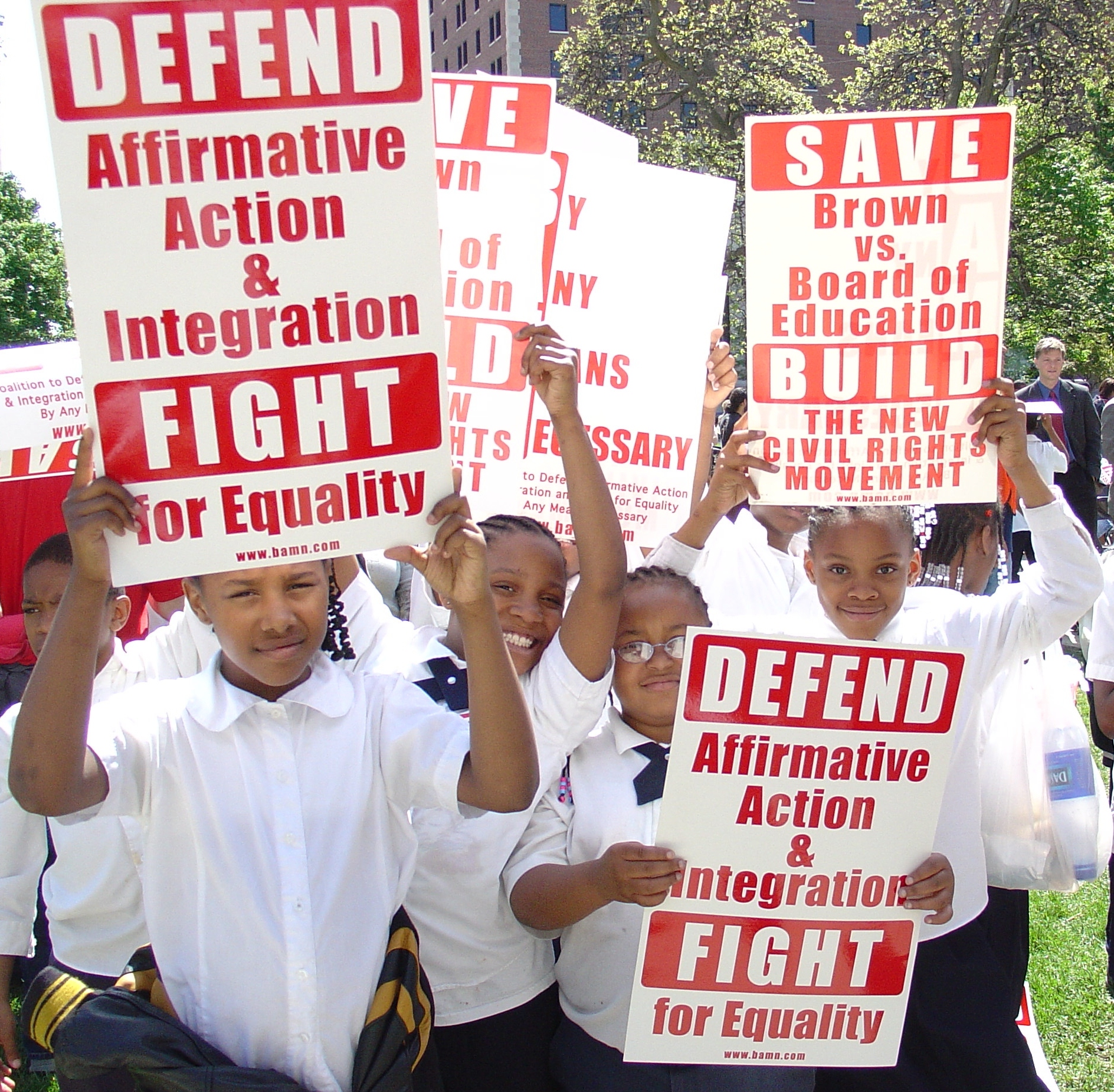
Excerpt from the Testimony of
Historian Dr. John Hope Franklin
From the Transcript of
Grutter V. Bollinger,
The University of Michigan
Affirmative Action Trial
January 24, 2001
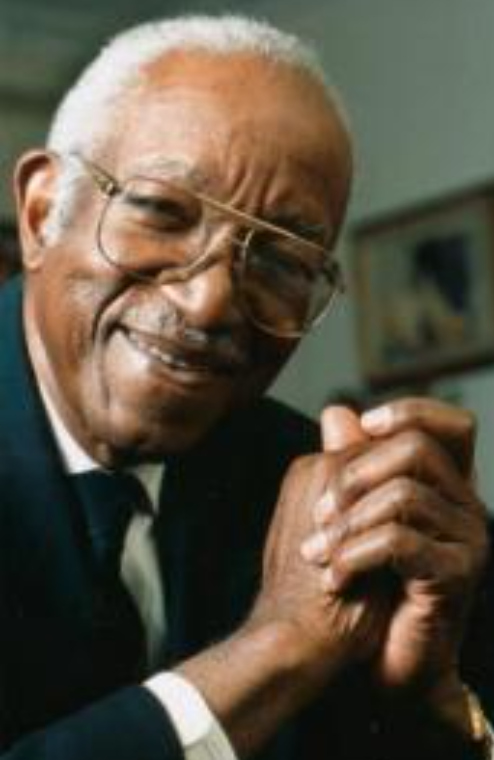
January 2, 1915 – March 25, 2009
GRUTTER -vs- BOLLINGER, ET AL
9 [...] So, I went to college without ever
10 having had a modern foreign language. And I had to
11 take--and I knew that by the time I was a sophomore
12 in college and I was going to major in history.
13 And my major professor who was a
14 young white man, the chairman of the History
15 Department at Fisk University which was all black,
16 of course, it had a mix, it was white and black
17 faculty.
18 He almost immediately decided that he
19 wanted me to go to Harvard. And we sort of--as an
20 undergraduate I was doing everything that he wanted
21 me to do to be certain that I was eligible to go to
22 Harvard, including the Harvard requirement of two
23 modern foreign languages in order to qualify with
24 any advanced degree.
25 So, there I was as a sophomore and
 GRUTTER -vs- BOLLINGER, ET AL
12
1 junior at Fisk University taking elementary courses
2 in French and German, so that I could be eligible to
3 qualify at Harvard.
4 And I took them and I did qualify at
5 Harvard in both languages, and was prepared in a
6 very careful way by him to be able to do the work at
7 Harvard.
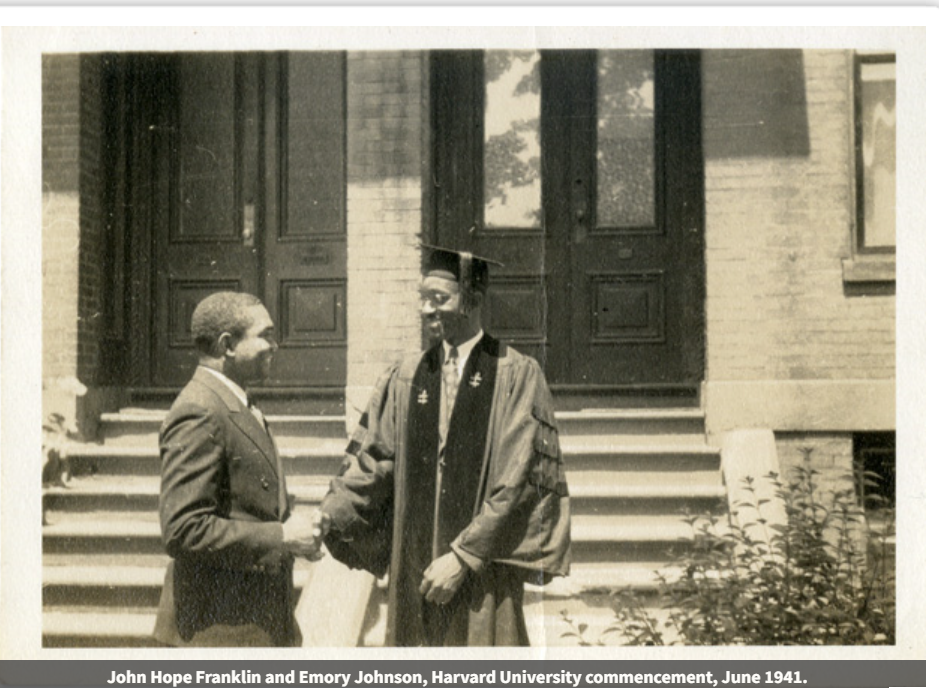
8 When I went to Harvard, I had no
9 problem. As a matter of fact it was, if I can say
10 so, it was a push over if that, because of his
11 careful preparation. It was no other explanation
12 for it.
13 Q. Were there many Fisk students at that point who
14 ended up at the Harvard graduate school?
15 A. No, there were not many Fisk students at Harvard
16 graduate school. Indeed, there were almost no
17 students, other than white students at Harvard. I
18 had no black students, fellow students in any of my
19 classes at Harvard.
20 There were a few at the university,
21 maybe one in English and two in law school and two
22 in the Biology Department, and maybe one or two
23 more. Two or three other graduates.
24 I would say that there might have
25 been as many as--this is a liberal figure, as many
GRUTTER -vs- BOLLINGER, ET AL
13
1 as a dozen students that were African Americans at
2 Harvard in 1936 when I went there. In 1935 when I
3 went there.
4 Q. Of thousands?
5 A. What's that?
6 Q. Of thousands?
7 A. Yes, there were 10,000 or more students at Harvard.
8 And I went to Harvard, of course, it was the pit of
9 the Depression. My father had to become what we
10 describe generously as became bankrupt. We lost our
11 home simply because of the extraordinary bite of the
12 Depression. The poverty was unspeakable.
13 So, that I went to Harvard, I could
14 not have gone to the University of Oklahoma as you
15 certainly know. And the University of Oklahoma not
16 only did not admit any blacks, no blacks could be in
17 the town after dark.
18 And they gave me a scholarship, out
19 of state scholarship it was called, and that was for
20 a hundred dollars if, if I passed my courses. That
21 is, I did not have the freedom to fail as they did
22 at normal Oklahoma. You were admitted and then you
23 might or you might not pass.
24 But I didn't have that privilege, I
25 had to pass in order to get that hundred dollars
GRUTTER -vs- BOLLINGER, ET AL
12
1 junior at Fisk University taking elementary courses
2 in French and German, so that I could be eligible to
3 qualify at Harvard.
4 And I took them and I did qualify at
5 Harvard in both languages, and was prepared in a
6 very careful way by him to be able to do the work at
7 Harvard.
8 When I went to Harvard, I had no
9 problem. As a matter of fact it was, if I can say
10 so, it was a push over if that, because of his
11 careful preparation. It was no other explanation
12 for it.
13 Q. Were there many Fisk students at that point who
14 ended up at the Harvard graduate school?
15 A. No, there were not many Fisk students at Harvard
16 graduate school. Indeed, there were almost no
17 students, other than white students at Harvard. I
18 had no black students, fellow students in any of my
19 classes at Harvard.
20 There were a few at the university,
21 maybe one in English and two in law school and two
22 in the Biology Department, and maybe one or two
23 more. Two or three other graduates.
24 I would say that there might have
25 been as many as--this is a liberal figure, as many
GRUTTER -vs- BOLLINGER, ET AL
13
1 as a dozen students that were African Americans at
2 Harvard in 1936 when I went there. In 1935 when I
3 went there.
4 Q. Of thousands?
5 A. What's that?
6 Q. Of thousands?
7 A. Yes, there were 10,000 or more students at Harvard.
8 And I went to Harvard, of course, it was the pit of
9 the Depression. My father had to become what we
10 describe generously as became bankrupt. We lost our
11 home simply because of the extraordinary bite of the
12 Depression. The poverty was unspeakable.
13 So, that I went to Harvard, I could
14 not have gone to the University of Oklahoma as you
15 certainly know. And the University of Oklahoma not
16 only did not admit any blacks, no blacks could be in
17 the town after dark.
18 And they gave me a scholarship, out
19 of state scholarship it was called, and that was for
20 a hundred dollars if, if I passed my courses. That
21 is, I did not have the freedom to fail as they did
22 at normal Oklahoma. You were admitted and then you
23 might or you might not pass.
24 But I didn't have that privilege, I
25 had to pass in order to get that hundred dollars
GRUTTER -vs- BOLLINGER, ET AL
14
1 from the state of Oklahoma against--paid toward my
2 tuition. And that remained the practice down to the
3 time that they admitted blacks to Oklahoma in the
4 1950s.
5 Now, the matter of trying to do the
6 kind of work that I undertook to do in graduate
7 school and after, it would project my life work.
8 Brought me into contact with the kind of life that I
9 hadn't imagined.
10 When I took my general examinations
11 at Harvard in the spring of 1939, I decided to do a
12 dissertation on North Carolina. So, I went to
13 North Carolina and there I went in to see the
14 director of the state archives.
15 And I told him I wanted to do
16 research on free negroes in North Carolina from 1798
17 to 60. And he said, well, I suppose I will have to
18 do something about that. He said, I see no reason
19 why you wouldn't be able to work here, he said, but
20 when we built this building we didn't anticipate
21 that anyone of your color would work here. And so
22 we don't have any place for you to work.
23 He said, but if you will give me a
24 week I'll try to arrange something. And I remained
25 silent and I looked at him and I had my mental
GRUTTER -vs- BOLLINGER, ET AL
15
1 adding machine, I was going to have to pay the rent,
2 board, room and all of that for a week while I
3 twiddled my thumbs.
4 And I just looked at him and he said,
5 well, what about a half week. I said, I'll be back
6 Thursday, this was Monday. I went back Thursday and
7 they prepared a place for me.
8 They cleared out one of the exhibit
9 rooms, the smallest exhibit room there was for the
10 archives or display of archives of materials. And
11 they put a desk and a chair and a waste basket in
12 there.
13 And he gave me a key, he said, I'll
14 give you a key to the stacks because I don't think
15 we can request the white pages to deliver materials
16 to you. So you'll have to get your materials
17 yourself.
18 I said, all right. He gave me his
19 key. He said, you go through the search room that's
20 where all the whites were sitting and doing their
21 research. You go through the search room to the
22 stacks, and you get what you want and bring it over
23 to your room and you can work there.
24 And I did that and it turned out to
25 be the most satisfactory arrangement, because I
GRUTTER -vs- BOLLINGER, ET AL
16
1 could sort of window shop in the stacks, pull down
2 what I wanted, things that I thought I might want.
3 And I would come through the main
4 reading room with my dolly and my library card,
5 laden with materials. And the white researchers
6 looked at me with some disdain as well as jealousy.
7 And two weeks later the director of
8 the archives told me and said, I have to take your
9 key. And I searched my conduct and wondered what I
10 had done that was offensive.
11 I said what's the matter, he said
12 well, the white searchers who see you coming through
13 the room with all of your materials which you have
14 selected yourself, says that this is a
15 discrimination against them and they want keys
16 themselves.
17 He said, well, I can't give everyone
18 keys and I therefore will have to take your key.
19 And you will have to abide by the regular rules
20 which, of course, would involve your bringing one
21 request in, depositing it, then going back to your
22 room and waiting for that to be delivered to you.
23 And I said, well, if that's what you
24 think it should be, all right. Now, it was at that
25 point that I realized the inconsistency and the
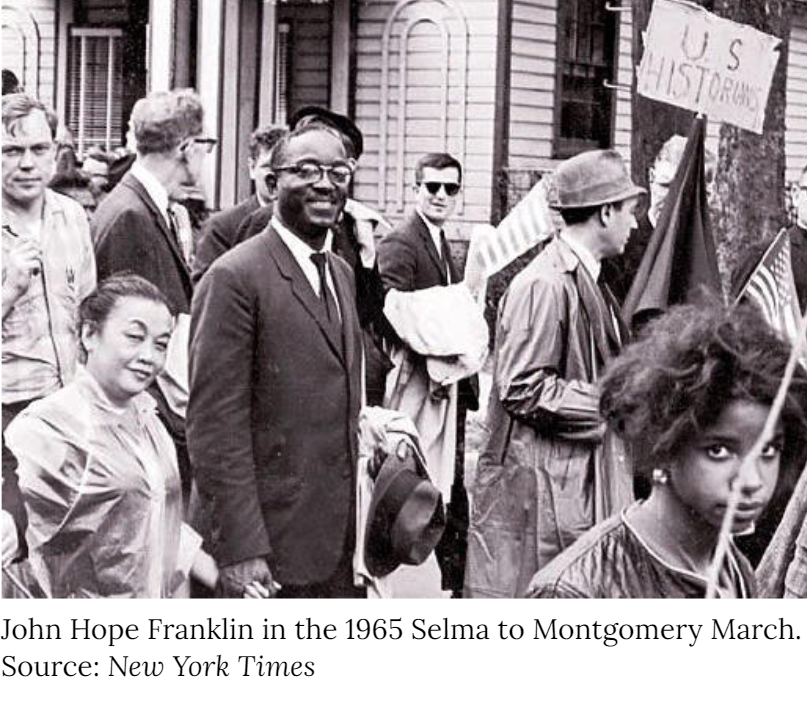 GRUTTER -vs- BOLLINGER, ET AL
17
1 remarkable ingenuity, if I may put it, of racial
2 discrimination of those who practiced it.
3 I had to work in three libraries.
4 And within a radius of three blocks of each other,
5 literally within three blocks of each other. One of
6 them was the archives where I described that I had
7 used a separate room.
8 The other was the state library on
9 the other side of the square. And there I could go
10 into the main reading room and work, but there was a
11 regular place in the stacks for African Americans to
12 sit.
13 And we were not supposed to go take
14 the books off the shelf or take the newspapers in
15 there. But actually we were to make that request,
16 but we could sit there in the stacks and use the
17 materials.
18 Then on the other side of the square
19 was the Supreme Court library. And there were no
20 restrictions at all. We sat and did our work at the
21 same table that white people were sitting.
22 I said this is rather strange. In
23 the radius of two or three blocks, we had three
24 practices, three practices of racial distinction or
25 discrimination or segregation.
GRUTTER -vs- BOLLINGER, ET AL
18
1 And that gave me to understand that
2 the practice of racial segregation was sort of
3 improvisational. That is they made it up as they
4 went along.
5 They have did this on one side of the
6 block, they did another on the other side of the
7 block, and another on the other side of the block.
8 Whatever seemed to pass their minds, as long as
9 there was distinction.
10 As long as there was a mark of, as
11 old people say, a mark of distinction, a mark of
12 oppression of some kind. The differentiation was
13 there.
14 Or another way, not only was this
15 practice at the highest levels, what I think of
16 libraries would be fairly high. It was practiced at
17 the other extreme, that I couldn't say which was
18 more praiseworthy or meritorious.
19 Outside the city, just outside the
20 city there were two barbecue joints or places where
21 you could go. I didn't go, but some other people
22 did. I went once and that was enough for me. I
23 didn't have to have a barbecue, I had to have those
24 papers and things like that in the libraries. But I
25 didn't have to have a barbecue.
GRUTTER -vs- BOLLINGER, ET AL
19
1 But this struck me as rather
2 remarkable, and it was not unlike what they were
3 doing downtown in the capital square. You go out to
4 one of these places, barbecue places.
5 One if you went in to one of them and
6 you wanted to be served, you sat in your car and
7 young white girls would come out and bring anything
8 you wanted, serve you with great applaud.
9 Across the road was another, and you
10 could go and sit in your car all day and they would
11 look out there, and you would be in your car and
12 they wouldn't come out.
13 But you go in the place and you were
14 welcomed heartedly, warmly. I said, what's going on
15 here? On the one side they say we don't serve
16 blacks in cars. On the other side they say we do.
17 On the one side they say you're
18 welcome to come in and eat. On the other side they
19 said you can't even come in the door. You need a
20 road map, or you need an encyclopedia and a number
21 of other aides to help you navigate your way through
22 these racial minds as it were.
23 And that gave me to understand that
24 race distinctions were not very significant, except
25 to make a difference to. And it must have done
GRUTTER -vs- BOLLINGER, ET AL
20
1 something to the people, it must have given them
2 some sense of superiority, or it must have given
3 them a sense of satisfaction if they could be a few
4 notches above or away from others.
5 And I decided that that was a kind of
6 a sickness, a kind of searching for something that
7 would give them a sense of security and superiority
8 and advantage.
9 And that to me--see, I found it in
10 other ways too. I've described what doing research
11 at North Carolina meant. If doing research in North
12 Carolina was that bad, when I went to Alabama to do
13 research with the confederate flag flying over the
14 Archives Building, I didn't know whether I even
15 wanted to attempt to do research there.
16 And the first morning I went in to do
17 research, I told the woman in the search room that I
18 wanted these materials, and she said, yes, I will
19 get them for you. And she brought them and handed
20 them to me.
21 And I waited for her to tell me what
22 to do with these materials, with this background of
23 having waited three days for someone to arrange a
24 room in North Carolina, I thought that I might have
25 to wait a week in Alabama or a month.
GRUTTER -vs- BOLLINGER, ET AL
21
1 And she gave me the materials and she
2 stood there and looked at me. And I stood there in
3 a quandary, I didn't know what to do with them, I
4 didn't know where to go, where to sit.
5 I'm in the reading room, but I assume
6 that that reading room was where I could not sit.
7 But since she had not indicated to me that there was
8 a room separate for me in the basement or somewhere
9 else, I then did what I would do in Detroit at a
10 library, I went to look for a quiet corner.
11 And so I went toward that corner, she
12 said you can't sit there. I was like, why don't you
13 tell me where to sit, I said to myself. I said,
14 well, where should I sit, she said, you sit over
15 here with the others. She said that's the coolest
16 part of the room where they're sitting, and they
17 need to meet you anyway.
18 And so she said, you sits there.
19 Then she made all of them stop doing what they were
20 doing, and she introduced them to me. And she said,
21 now you sit there with the others, so I did.
22 But this is all confusing, you see.
23 You can't be certain what to do, you see. That's
24 what I meant by improvisation, you don't know, you
25 don't know where you stand. And I work there off
GRUTTER -vs- BOLLINGER, ET AL
17
1 remarkable ingenuity, if I may put it, of racial
2 discrimination of those who practiced it.
3 I had to work in three libraries.
4 And within a radius of three blocks of each other,
5 literally within three blocks of each other. One of
6 them was the archives where I described that I had
7 used a separate room.
8 The other was the state library on
9 the other side of the square. And there I could go
10 into the main reading room and work, but there was a
11 regular place in the stacks for African Americans to
12 sit.
13 And we were not supposed to go take
14 the books off the shelf or take the newspapers in
15 there. But actually we were to make that request,
16 but we could sit there in the stacks and use the
17 materials.
18 Then on the other side of the square
19 was the Supreme Court library. And there were no
20 restrictions at all. We sat and did our work at the
21 same table that white people were sitting.
22 I said this is rather strange. In
23 the radius of two or three blocks, we had three
24 practices, three practices of racial distinction or
25 discrimination or segregation.
GRUTTER -vs- BOLLINGER, ET AL
18
1 And that gave me to understand that
2 the practice of racial segregation was sort of
3 improvisational. That is they made it up as they
4 went along.
5 They have did this on one side of the
6 block, they did another on the other side of the
7 block, and another on the other side of the block.
8 Whatever seemed to pass their minds, as long as
9 there was distinction.
10 As long as there was a mark of, as
11 old people say, a mark of distinction, a mark of
12 oppression of some kind. The differentiation was
13 there.
14 Or another way, not only was this
15 practice at the highest levels, what I think of
16 libraries would be fairly high. It was practiced at
17 the other extreme, that I couldn't say which was
18 more praiseworthy or meritorious.
19 Outside the city, just outside the
20 city there were two barbecue joints or places where
21 you could go. I didn't go, but some other people
22 did. I went once and that was enough for me. I
23 didn't have to have a barbecue, I had to have those
24 papers and things like that in the libraries. But I
25 didn't have to have a barbecue.
GRUTTER -vs- BOLLINGER, ET AL
19
1 But this struck me as rather
2 remarkable, and it was not unlike what they were
3 doing downtown in the capital square. You go out to
4 one of these places, barbecue places.
5 One if you went in to one of them and
6 you wanted to be served, you sat in your car and
7 young white girls would come out and bring anything
8 you wanted, serve you with great applaud.
9 Across the road was another, and you
10 could go and sit in your car all day and they would
11 look out there, and you would be in your car and
12 they wouldn't come out.
13 But you go in the place and you were
14 welcomed heartedly, warmly. I said, what's going on
15 here? On the one side they say we don't serve
16 blacks in cars. On the other side they say we do.
17 On the one side they say you're
18 welcome to come in and eat. On the other side they
19 said you can't even come in the door. You need a
20 road map, or you need an encyclopedia and a number
21 of other aides to help you navigate your way through
22 these racial minds as it were.
23 And that gave me to understand that
24 race distinctions were not very significant, except
25 to make a difference to. And it must have done
GRUTTER -vs- BOLLINGER, ET AL
20
1 something to the people, it must have given them
2 some sense of superiority, or it must have given
3 them a sense of satisfaction if they could be a few
4 notches above or away from others.
5 And I decided that that was a kind of
6 a sickness, a kind of searching for something that
7 would give them a sense of security and superiority
8 and advantage.
9 And that to me--see, I found it in
10 other ways too. I've described what doing research
11 at North Carolina meant. If doing research in North
12 Carolina was that bad, when I went to Alabama to do
13 research with the confederate flag flying over the
14 Archives Building, I didn't know whether I even
15 wanted to attempt to do research there.
16 And the first morning I went in to do
17 research, I told the woman in the search room that I
18 wanted these materials, and she said, yes, I will
19 get them for you. And she brought them and handed
20 them to me.
21 And I waited for her to tell me what
22 to do with these materials, with this background of
23 having waited three days for someone to arrange a
24 room in North Carolina, I thought that I might have
25 to wait a week in Alabama or a month.
GRUTTER -vs- BOLLINGER, ET AL
21
1 And she gave me the materials and she
2 stood there and looked at me. And I stood there in
3 a quandary, I didn't know what to do with them, I
4 didn't know where to go, where to sit.
5 I'm in the reading room, but I assume
6 that that reading room was where I could not sit.
7 But since she had not indicated to me that there was
8 a room separate for me in the basement or somewhere
9 else, I then did what I would do in Detroit at a
10 library, I went to look for a quiet corner.
11 And so I went toward that corner, she
12 said you can't sit there. I was like, why don't you
13 tell me where to sit, I said to myself. I said,
14 well, where should I sit, she said, you sit over
15 here with the others. She said that's the coolest
16 part of the room where they're sitting, and they
17 need to meet you anyway.
18 And so she said, you sits there.
19 Then she made all of them stop doing what they were
20 doing, and she introduced them to me. And she said,
21 now you sit there with the others, so I did.
22 But this is all confusing, you see.
23 You can't be certain what to do, you see. That's
24 what I meant by improvisation, you don't know, you
25 don't know where you stand. And I work there off
 GRUTTER -vs- BOLLINGER, ET AL
22
1 and on for weeks.
2 And at one point I wanted to look at
3 a set of papers, Governor Winston papers. And I
4 said to the person in the search room, I want to see
5 the Winston papers, they said we can't show them to
6 you, they're in preparation.
7 The only way you can see them is to
8 get permission from the director of the archives.
9 Who at that time was Ms. Marie Bankhead-Owens. And
10 I said, well, when does she come in. They said,
11 well, she comes in, she will be in Thursday
12 afternoon. This is Wednesday morning.
13 She will be in Thursday afternoon. I
14 said, well, how will I know that she is here. She
15 says, well, you will know. Everyone knows when
16 Ms. Owens arrives.
17 So I waited. And the next afternoon,
18 indeed, the whole building took on a different
19 atmosphere. I said Ms. Owens must be here.
20 And I went up to her office and I
21 told her secretary, I want to have a word with
22 Ms. Owens. And she said, well, she's in there, go
23 in.
24 And I went in, and as I went in I got
25 another lesson. The secretary did not close the
GRUTTER -vs- BOLLINGER, ET AL
23
1 door behind me, and when I got in to speak to
2 Ms. Owens she did not ask me to sit down. I said
3 this is another mine field I'm in.
4 And she said, what can I do for you,
5 I told her I wanted to see Governor Winston's
6 papers. And she said certainly you can see the
7 Winston papers and anything else that you want.
8 You're free to see them, just let me know and I'll
9 be glad to facilitate your efforts.
10 I said, well, I do appreciate that
11 very much, I'm still standing. And she said, they
12 tell me that there's a Harvard nigger in the
13 building, have you seen him.
14 And the secretary whose door was open
15 and she was listening to the conversation, she said,
16 that's him, Ms. Owens, that's him. She said, are
17 you the Harvard nigger?
18 She said, I had no idea. She said,
19 you got right nice manners, why don't you sit down.
20 My first invitation to have a seat.
21 She said, where were you born and
22 raised, I said Oklahoma. She said, no, no, that's
23 not where you got those nice manners. I wanted to
24 tell her that my mother taught me, I was discreet
25 enough to let her explore the matter.
GRUTTER -vs- BOLLINGER, ET AL
24
1 She said, where did you go to school,
2 I said, Rentiesville, Oklahoma, Tulsa, Oklahoma.
3 She said, no, no, I don't mean that. Where did you
4 go to school out of the state. And I said I went to
5 school at Fisk University in Nashville, Tennessee.
6 She said that's it, that's where you
7 learned those manners. Nice good old confederate
8 state. And I let that pass. And she then went on
9 to tell me about the south and about manners and so
10 forth.
11 And she didn't undertake to tell me
12 why she treated me like that, except that when she
13 told me of an incident where she had a relationship
14 with a black woman, wife of the president of
15 Tuskegee.
16 She said, I called her Ms. Moten.
17 She said, but I wouldn't call you--it would be
18 beyond the realm of possibility for me to refer to
19 you as mister, do you understand that? I'm not
20 going to ever call you mister, I don't call black
21 men mister.
22 I'll call you doctor, reverend,
23 professor, whatever comes to mind, except for
24 mister. You don't deserve that much respect. I
25 said, well, as you will.
GRUTTER -vs- BOLLINGER, ET AL
25
1 And the problem with her after that
2 was that she wanted to talk so much that she took up
3 so much of my time and I was busy. And she wanted
4 to talk to me about the race thing.
5 And I began then to think about what
6 race really meant to her and to people like her.
7 And I could not escape the conclusion that the only
8 thing that race meant to her was, well, the only
9 thing that race meant to these other people that I
10 talked about.
11 Is that they wanted to be certain
12 that there was maintained a distant, not laterally
13 but vertically. A distance where they were
14 somewhere above a cut above, that's very essential,
15 very, very essential.
16 And whether it's in a library or
17 whether it's in a hotel or rather it's in school or
18 wherever, this distance, this vertical distance must
19 be maintained this superior position. The position
20 of advantage must be maintained.
21 And I came to the conclusion that the
22 maintenance of this was so important that they
23 didn't mind being inconsistent. They didn't mind
24 being improvisational, as long as that gave them
25 this vertical advantage where they were somewhere
GRUTTER -vs- BOLLINGER, ET AL
26
1 above and somewhere beyond.
2 And that to me was a revelation just
3 to come to that conclusion and to reach the view
4 that these people were groping for a way to live and
5 to co-exist with other people.
6 And the only way they could do it
7 comfortably was to have this distance. To have this
8 sense of self importance and of superiority, if you
9 will.
10 And I have always had difficulty in
11 squaring that with the so-called American way of
12 living, practicing, doing things. And not only was
13 this improvisation was inconsistent and incongruous
14 too, with what we are taught to be the American way
15 of the practice of equality on the one hand, and
16 human relations on the other as well.
GRUTTER -vs- BOLLINGER, ET AL
90
GRUTTER -vs- BOLLINGER, ET AL
22
1 and on for weeks.
2 And at one point I wanted to look at
3 a set of papers, Governor Winston papers. And I
4 said to the person in the search room, I want to see
5 the Winston papers, they said we can't show them to
6 you, they're in preparation.
7 The only way you can see them is to
8 get permission from the director of the archives.
9 Who at that time was Ms. Marie Bankhead-Owens. And
10 I said, well, when does she come in. They said,
11 well, she comes in, she will be in Thursday
12 afternoon. This is Wednesday morning.
13 She will be in Thursday afternoon. I
14 said, well, how will I know that she is here. She
15 says, well, you will know. Everyone knows when
16 Ms. Owens arrives.
17 So I waited. And the next afternoon,
18 indeed, the whole building took on a different
19 atmosphere. I said Ms. Owens must be here.
20 And I went up to her office and I
21 told her secretary, I want to have a word with
22 Ms. Owens. And she said, well, she's in there, go
23 in.
24 And I went in, and as I went in I got
25 another lesson. The secretary did not close the
GRUTTER -vs- BOLLINGER, ET AL
23
1 door behind me, and when I got in to speak to
2 Ms. Owens she did not ask me to sit down. I said
3 this is another mine field I'm in.
4 And she said, what can I do for you,
5 I told her I wanted to see Governor Winston's
6 papers. And she said certainly you can see the
7 Winston papers and anything else that you want.
8 You're free to see them, just let me know and I'll
9 be glad to facilitate your efforts.
10 I said, well, I do appreciate that
11 very much, I'm still standing. And she said, they
12 tell me that there's a Harvard nigger in the
13 building, have you seen him.
14 And the secretary whose door was open
15 and she was listening to the conversation, she said,
16 that's him, Ms. Owens, that's him. She said, are
17 you the Harvard nigger?
18 She said, I had no idea. She said,
19 you got right nice manners, why don't you sit down.
20 My first invitation to have a seat.
21 She said, where were you born and
22 raised, I said Oklahoma. She said, no, no, that's
23 not where you got those nice manners. I wanted to
24 tell her that my mother taught me, I was discreet
25 enough to let her explore the matter.
GRUTTER -vs- BOLLINGER, ET AL
24
1 She said, where did you go to school,
2 I said, Rentiesville, Oklahoma, Tulsa, Oklahoma.
3 She said, no, no, I don't mean that. Where did you
4 go to school out of the state. And I said I went to
5 school at Fisk University in Nashville, Tennessee.
6 She said that's it, that's where you
7 learned those manners. Nice good old confederate
8 state. And I let that pass. And she then went on
9 to tell me about the south and about manners and so
10 forth.
11 And she didn't undertake to tell me
12 why she treated me like that, except that when she
13 told me of an incident where she had a relationship
14 with a black woman, wife of the president of
15 Tuskegee.
16 She said, I called her Ms. Moten.
17 She said, but I wouldn't call you--it would be
18 beyond the realm of possibility for me to refer to
19 you as mister, do you understand that? I'm not
20 going to ever call you mister, I don't call black
21 men mister.
22 I'll call you doctor, reverend,
23 professor, whatever comes to mind, except for
24 mister. You don't deserve that much respect. I
25 said, well, as you will.
GRUTTER -vs- BOLLINGER, ET AL
25
1 And the problem with her after that
2 was that she wanted to talk so much that she took up
3 so much of my time and I was busy. And she wanted
4 to talk to me about the race thing.
5 And I began then to think about what
6 race really meant to her and to people like her.
7 And I could not escape the conclusion that the only
8 thing that race meant to her was, well, the only
9 thing that race meant to these other people that I
10 talked about.
11 Is that they wanted to be certain
12 that there was maintained a distant, not laterally
13 but vertically. A distance where they were
14 somewhere above a cut above, that's very essential,
15 very, very essential.
16 And whether it's in a library or
17 whether it's in a hotel or rather it's in school or
18 wherever, this distance, this vertical distance must
19 be maintained this superior position. The position
20 of advantage must be maintained.
21 And I came to the conclusion that the
22 maintenance of this was so important that they
23 didn't mind being inconsistent. They didn't mind
24 being improvisational, as long as that gave them
25 this vertical advantage where they were somewhere
GRUTTER -vs- BOLLINGER, ET AL
26
1 above and somewhere beyond.
2 And that to me was a revelation just
3 to come to that conclusion and to reach the view
4 that these people were groping for a way to live and
5 to co-exist with other people.
6 And the only way they could do it
7 comfortably was to have this distance. To have this
8 sense of self importance and of superiority, if you
9 will.
10 And I have always had difficulty in
11 squaring that with the so-called American way of
12 living, practicing, doing things. And not only was
13 this improvisation was inconsistent and incongruous
14 too, with what we are taught to be the American way
15 of the practice of equality on the one hand, and
16 human relations on the other as well.
GRUTTER -vs- BOLLINGER, ET AL
90